
My Journey To Wilton House
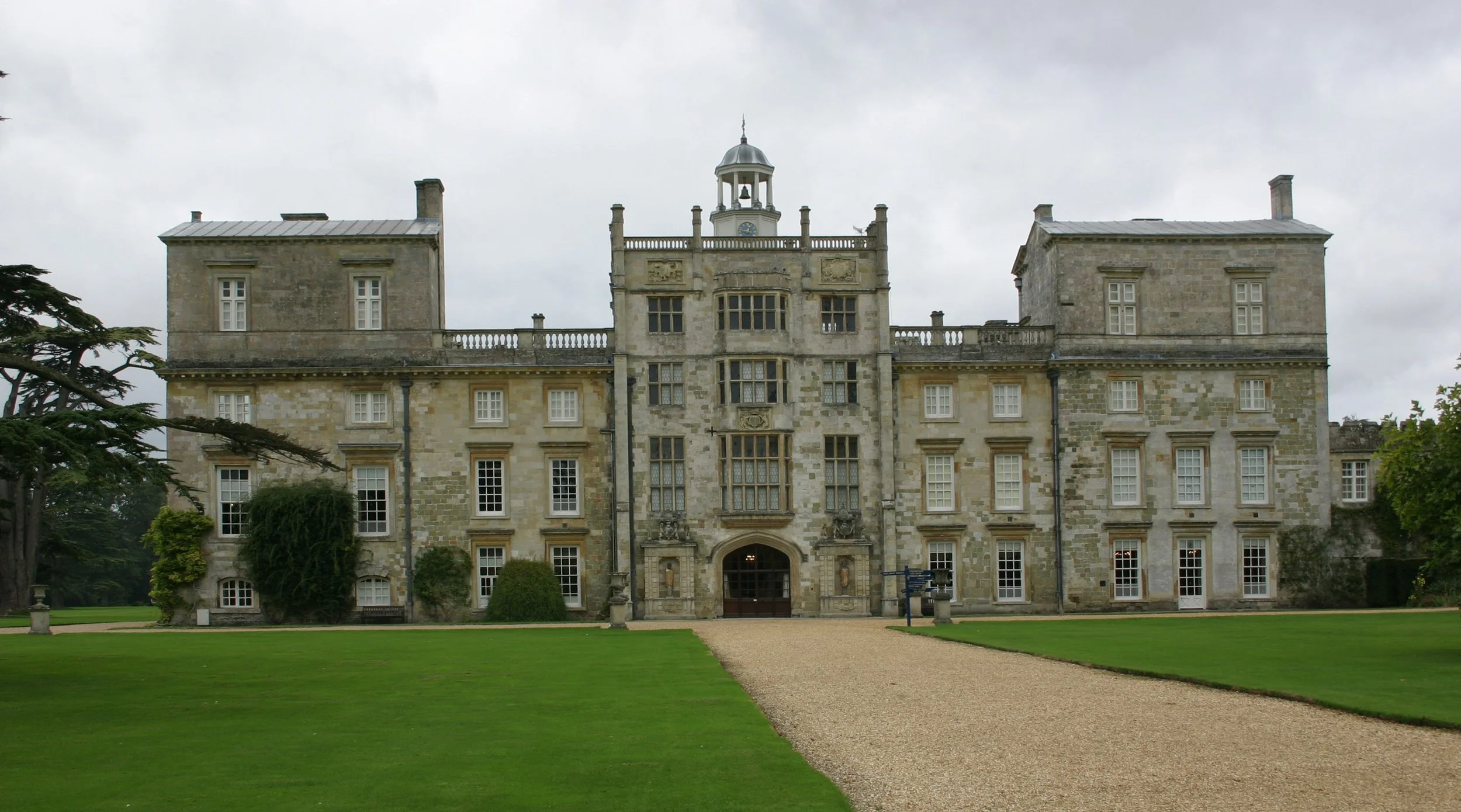
Wilton House in Wiltshire, England
Years ago, when I started the English doctoral program at Northwestern University, I found a course that stopped me in my tracks: “Women Writers of the Renaissance.”
This was intriguing… and puzzling. As an undergrad at UCLA, I had delved deep into Renaissance literature. Philip Sidney, Thomas Wyatt, Christopher Marlowe, Ben Jonson, Edmund Spenser, John Donne—these were old friends. I even had handshake acquaintance with lesser-known writers: Thomas Lodge, Thomas Middleton, William Rowley, John Lyly. But in all the syllabi, all the readings, all the lectures, there was one thing I’d never encountered: a woman writer.
Of course, I enrolled. There, I met a batch of new friends: Marie de France, Anne Askew, Emilia Lanier. It was more than a pleasure to meet them—it was a revelation. At last, I was able to see myself reflected in this literary era that I loved so much.
One writer stood out for me in this group of silenced women writers—mainly because she refused to be silenced. Despite proscriptions against women’s writing, she told her story—loud and in print. She was Mary Wroth, niece to famed Elizabethan poet Sir Philip Sidney. Wroth could have been heir to her uncle’s literary fame, his second self, but that honor went to another, his nephew. But she persisted. She wrote in all the forms that made her uncle famous: love sonnets, pastoral drama, romance narrative. In each, she injected her own uniquely feminine perspective, relentlessly questioning the received assumptions about gender relations, desire, love, and heartbreak.
After receiving my degree, I left academia to work as a writer and editor. I liked the work, but something was missing. And Mary Wroth lingered in my mind. I’d never written fiction, but this project called to me. So I started.
That was 2009. Just a germ of an idea.
By 2010, I started putting words down. No real research, no outline, just words. And a revelation: in all my years of studying literature, I had no idea how to write it.
2011: Started taking classes, including “Writing the Novel,” taught by Sarah Terez-Rosenblum, and “Novel in a Year,” taught by Rebecca Makkai (the first cohort for that now popular series!), both at StoryStudio in Chicago.
2012-2016: Writing the first draft. Alternating between researching and drafting. Realizing, yes, I do need an outline. Writing 450 pages in which the main character only achieved the age of 14. Throwing most of it away and starting over.
2016-2018: Revising, revising, revising.
2018: Wilton House wins third place in the Historical Novel Society’s New Novel Award.
2018-2019: Looking for an agent, connected with one who mentored me for 2 years through countless revisions before signing me. More revisions.
2020: Agent shopped novel around. Great feedback, but no takers. Suggestion that I find a way to condense it.
2022: Revised with a new framing device to condense the story and add metafictional layers.
2023: Still no buyers; my agent and I part ways.
2024: Looking for a new agent, investigating small and independent presses. Submit to Regal House Publishing. Offer extended!
2025: Contract signed! Edits and small revisions.
2026: prepping for publication. Proofs, cover design, gearing up my own personal marketing machine.
PROJECTED IN 2027: Wilton House will hit bookshelves April 13, 2027!
So, a long and winding road, but one that was worth it. And not just because it is ending in publication. Writing a novel is more than a creative project. It’s a journey of self-exploration and revelation. I’m a different person now than I was than I started. I know how my brain works. I trust my instincts. I understand my process.
For many, the journey to writing and publishing a novel is much shorter than mine. I joke with my friend author Jo Salazar that she’s lapped me 4 times since AFTER I started Wilton House. But every book is different; every author is unique. Every journey is its own.
And, even after all these years, I’d say the journey is not just the way to get to the destination. The journey is the point.